






Zambia’s latest solar procurement round deserves close attention far beyond Southern Africa. The country has opened a tender for up to 300 MW of grid-connected solar photovoltaic capacity paired with battery storage, and it is doing so through a new Carbon Feed-In Premium, or CFIP, structure backed by Article 6 carbon finance cooperation with Norway.
For developers, lenders, and infrastructure investors, the headline issue is simple: Zambia is trying to solve a bankability problem with an extra revenue layer tied to verified emissions reductions, not only with a power tariff.
Timing also matters. Zambia has faced severe electricity strain because hydropower still dominates its generation mix, while drought has repeatedly cut available output.
Reuters reported in 2024 that the government planned electricity imports and rationing because drought was hitting hydropower generation, while the World Bank said in 2025 that Zambia still relied on hydropower for about 80% of electricity generation and that recent droughts had exposed the weakness of relying so heavily on one source.
In that setting, solar with storage is moving from an energy-transition talking point to system-need procurement.
Why Zambia Is Taking a Different Route
A standard feed-in tariff or auction can work when power-sector risk is manageable and lenders feel comfortable with the offtake structure. Zambia’s new approach suggests officials see a gap between a tariff that buyers can carry and a tariff developers would need to secure financing.
GGGI’s official CFIP explainer says the mechanism provides additional incentive payments when the ordinary power purchase price is not enough to make a project viable, with payments funded through carbon credit sales between Zambia and Norway under Article 6 of the Paris Agreement.
That makes the tender more interesting than a plain solar auction. Rather than replacing power sale revenue, the premium sits on top of it. In practical terms, a developer still needs a power purchase agreement, but the project can also receive carbon-linked payments after verified performance.
Zambia’s ministries describe the program as results-based, meaning money is linked to actual electricity delivered to the grid and the resulting verified emissions reductions, not merely installed capacity.
Core Tender Terms Developers Need to Know
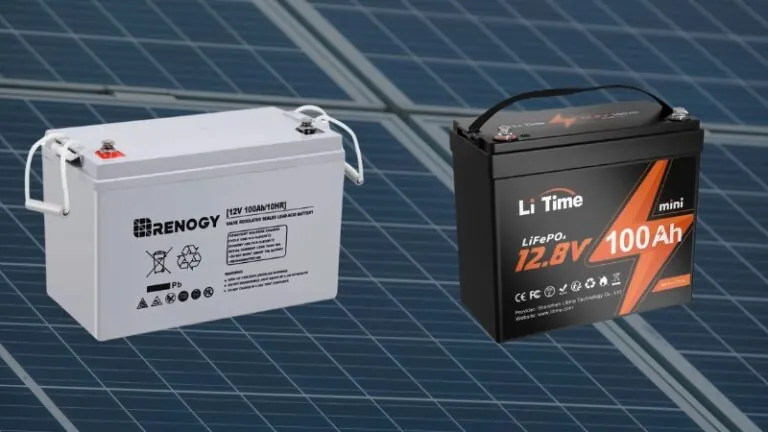
The first bid window covers up to 300 MW of solar PV with storage. Battery-related procurement discussions often branch into different chemistries and use cases, and even smaller-format options such as nimh rechargeable battery sit within that broader storage conversation.
Eligible projects must generally fall between 30 MWac and 100 MWac, and each project must include on-site battery storage with at least 30 minutes of duration.
Applications are open to local and international independent power producers, ZESCO and its subsidiaries, and other eligible participants. The application deadline is May 31, 2026, with selection expected by the end of June.
A few eligibility points stand out immediately:
| Item | Requirement |
| Total capacity in window | Up to 300 MW |
| Project size | 30 MWac to 100 MWac |
| Storage requirement | On-site BESS with at least 30 minutes |
| Grid requirement | Grid-connected |
| Main offtaker | ZESCO or its subsidiaries as primary offtaker |
| Application deadline | May 31, 2026 |
| Revenue support | Carbon premium on verified mitigation outcomes |
Tender materials also indicate that ZESCO will be the primary offtaker and that projects are expected to sell at least 50% of generated electricity to ZESCO or its subsidiaries.
For developers used to bilateral corporate PPAs, that detail matters because it frames bankability around the national utility rather than a mining or industrial anchor offtaker.
What “Feed-In Premium” Means in Zambia’s Version
In many markets, a feed-in premium means an extra payment above a market-linked electricity price. Zambia’s model is more specialized. GGGI describes CFIP as a results-based crediting mechanism tied to verified greenhouse-gas emission reductions from electricity supplied to the national grid.
Norway, through the bilateral Article 6 arrangement, pays for authorized mitigation outcomes, and that payment becomes the premium layer supporting project economics.
For developers, the key point is that revenue does not rest on one pillar. A project should have conventional electricity revenue from the PPA, then a second stream linked to carbon performance.
That can improve debt sizing, strengthen the equity case, and reduce the pressure to push the power tariff to levels that public buyers may reject.
Zambia’s own program language says eligible projects must show a financing gap and an internal rate of return below a benchmark of 12.5%, which signals that CFIP is being positioned as targeted support for projects that are close to viable, but not fully bankable on tariff revenue alone.
Why Storage Is Not an Add-On Here
Battery storage is not decorative in Zambia’s first CFIP window. GGGI’s explainer says the program prioritizes new generation paired with storage so solar output can support evening and peak periods, while also improving grid stability and reducing intermittency.
Zambia is clearly trying to buy firmer renewable capacity, not only cheap daytime megawatt-hours.
That design choice has commercial consequences. A 30-minute minimum storage requirement is modest by global standards, but it still changes project engineering, capex, warranty structure, auxiliary load planning, and lender diligence.
Developers that already have experience in solar-plus-storage integration will likely be better placed than groups that treat BESS as a last-minute compliance item.
In a market where grid reliability and reserve value matter, storage can also help a project present a stronger operational story during evaluation, even if the formal minimum remains relatively short-duration.
Bankability Gains, but Also New Workstreams
From a developer’s perspective, CFIP creates real upside, but it also adds layers of execution. Because payments are results-based, the measurement, reporting, and verification burden becomes more important than in a plain PPA-backed project.
GGGI says the digital MRV system will capture electricity produced and supplied to the grid, after which data will go through independent audit and verification before carbon payments are issued.
That means sponsors now need to think in parallel about project finance and carbon-market compliance. Metering design, data integrity, verification timelines, environmental and social safeguards, and host-country authorization all move closer to the center of the financing process.
For experienced IPPs, none of that is alien. Still, it introduces a discipline closer to climate-finance infrastructure than ordinary utility-scale PV procurement.
Another notable detail involves fund flows. Zanaco said in January that it had been appointed fund manager and financial trustee in the CFIP Mitigation Outcome Purchase Agreement.
That gives the structure a domestic financial intermediary with a defined role, which may help reassure participants that carbon-linked payments are being routed through a formal institutional setup rather than an ad hoc side arrangement.
How Past Zambian Solar Procurement Shapes Expectations
Zambia is not entering solar procurement from zero. The GET FiT Zambia program previously awarded 120 MWac of solar in 2019, after aiming for 100 MW and then adding 20 MW because bid results were favorable.
GET FiT’s official site says the solar tender concluded with 120 MWac awarded, while World Bank project documents noted that average prices reached about US¢4.41/kWh.
That earlier round showed investor appetite and price competitiveness, but it also exposed a harder truth: low bid prices alone do not close projects in difficult macro and sector conditions.
World Bank documentation later noted that the awarded projects had not yet reached financial close as of the 2020 project paper, while GET FiT updates in 2024 still referred to efforts to unlock financing for the 120 MW portfolio.
Zambia’s new CFIP design looks, at least in part, like a response to that lesson. Cheap bids are useful, but revenue certainty and risk allocation matter more when lenders make the final call.
What Developers Should Watch Closely
Developers considering participation should focus on five questions before getting carried away by the carbon-premium narrative:
- How bankable is the PPA with ZESCO after factoring in payment risk, security package, and curtailment provisions?
- How exactly will the premium be calculated, verified, and paid over time?
- How much execution risk sits in Article 6 authorization, MRV, and audit requirements?
- Can the storage design do more than merely satisfy the minimum rule?
- Does the project still work if carbon-related cash flows arrive slower than planned?
A well-structured CFIP project could be more financeable than a tariff-only solar plant in Zambia. A poorly prepared bid could end up looking complicated without being resilient.
Much will depend on implementation discipline after the call for proposals stage, especially around payment timelines, verification rules, and contractual allocation of risk between sponsors, offtakers, and carbon-finance counterparties.
Final Take
Zambia’s 300 MW tender is one of the more closely watched African renewable procurements of 2026 because it tests a different answer to a familiar problem: how to move bankable solar-plus-storage projects forward in a power system facing drought risk, utility constraints, and financing friction.
For developers, the new feed-in premium program offers a potentially valuable second revenue stream, but it also demands stronger discipline on verification, structuring, and project readiness. Markets across Africa will be watching whether Zambia turns carbon finance into real megawatts on the grid.