



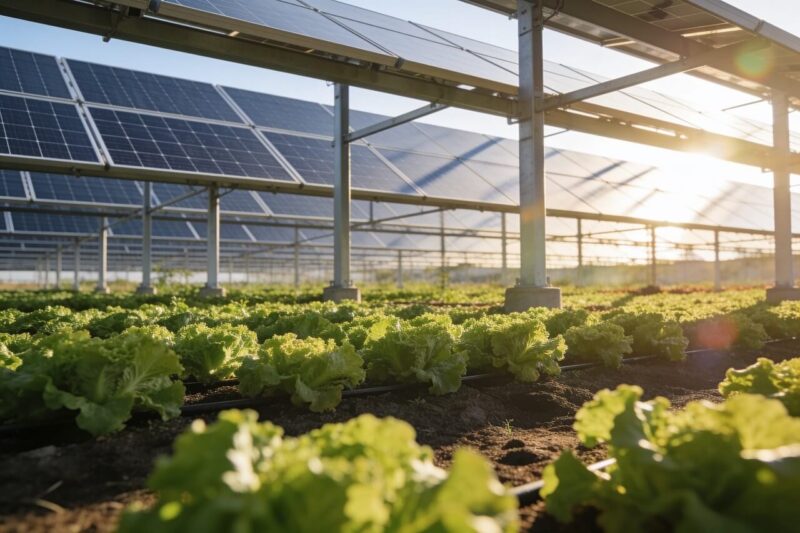
A field covered with solar panels can still produce food, support livestock, and remain part of a working farm. The approach is called agrivoltaics, or dual-use solar, and it combines photovoltaic energy generation with crops, grazing, or agricultural vegetation on the same land.
Success depends heavily on design. Panels may need extra height, wider rows, carefully planned shade patterns, and enough clearance for farm equipment.
Crop choice matters too. Lettuce growing under partial shade faces a very different environment from corn, while a flock of sheep can use spaces that would be awkward for a tractor.
Agrivoltaics therefore begins with a simple question: what agricultural activity needs to continue after the solar array arrives?
One Field Can Produce Both Food and Electricity
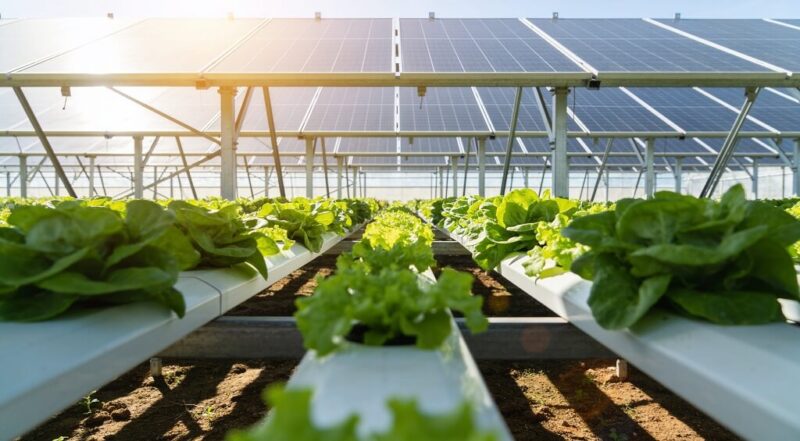
Conventional utility-scale solar installations often dedicate most of a site to energy production. Agrivoltaic projects organize the array so agricultural work remains possible beneath or between panels.
The U.S. Department of Energy defines agrivoltaics as co-locating solar photovoltaics with crop production, livestock grazing, or related agricultural uses.
Research supported by DOE and the U.S. Department of Agriculture has expanded considerably as communities look for ways to add solar capacity while keeping farmland productive.
Several layouts are already in use:
| Agrivoltaic approach | Agricultural use | Main design consideration |
| Elevated solar panels | Vegetables, berries, vines and specialty crops | Height, shade and worker access |
| Wider panel rows | Mechanized crops and pasture | Machinery width and sunlight |
| Solar grazing | Primarily sheep | Fencing, forage and equipment protection |
| Vegetated solar sites | Pollinator plants and native grasses | Seed mix and vegetation management |
According to USDA Climate Hubs, elevated systems commonly place panels at least 6 feet above vegetation. Inter-row systems leave larger growing spaces between panel rows and give crops greater exposure to direct sunlight.
Extra clearance has a price. DOE notes in its farmer solar guide that raising panels requires additional structural steel and may require deeper foundations because of wind loading. Wider spacing also reduces the amount of solar generating capacity that can fit on a given acre.
Partial Shade Can Become an Agricultural Tool
A solar panel creates a moving strip of shade during the day. For crops growing through intense summer heat, that shade can change soil temperature, evaporation, and plant water stress.
USDA researchers have identified several potential benefits, particularly in hot and dry regions. Shaded ground can retain moisture longer, while vegetation below panels releases water vapor that can cool the surrounding microclimate.
Crop response still varies widely.
A 2026 Indiana maize study recorded an average yield reduction of 7.7% in the fully shaded area beneath an elevated tracking system over four years, where average shading reached roughly 20% to 25%. Once crop and electricity production were considered together, researchers calculated an average land equivalent ratio of 1.37. A figure above 1 indicates greater combined productivity than separate single-purpose land uses.
Another recent study involving agrivoltaic lettuce in northern Thailand calculated a land equivalent ratio of 1.12. Growing conditions varied substantially depending on location beneath the array because each part of the planting area received a different amount of light.
Results such as those help explain why agrivoltaics cannot rely on a universal panel layout.
Crop Choice Has to Match the Shade Pattern
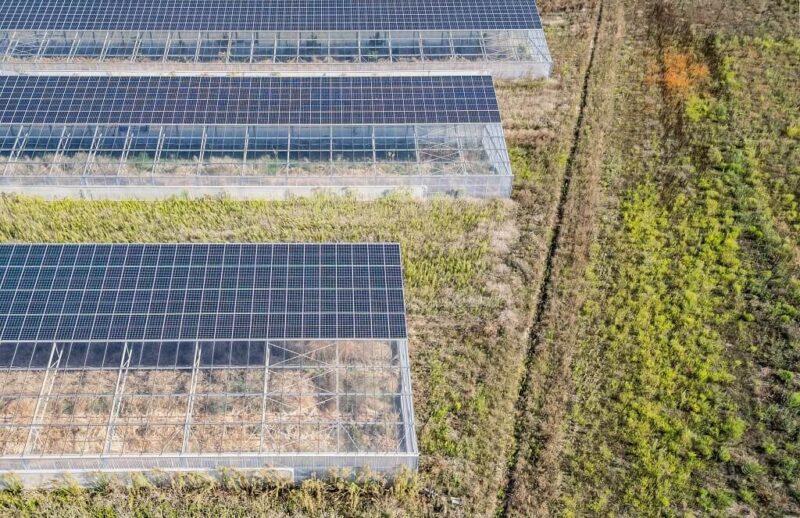
Some plants tolerate partial shade well. Others depend heavily on strong sunlight during critical stages of growth.
Leafy vegetables, certain berries, forage crops, and some specialty crops are natural research candidates because modest shade may reduce heat or water stress. Corn and other high-light field crops demand closer attention to panel spacing and tracking.
Even varieties of the same crop may behave differently.
Researchers studying commercial agrivoltaic farms in Japan reported in 2026 that crops showed measurable shade-avoidance responses, including taller growth and changes in how plants allocated biomass between shoots and roots. Sweet potato varieties differed in how strongly those responses affected yield.
Farmers therefore need local trials, agronomic data, and realistic yield expectations. Soil, rainfall, latitude, irrigation, panel geometry, and planting dates can all alter the result.
A crop that performs well beneath panels in Arizona may respond differently in Minnesota.
Sheep May Be Solar Farming’s Easiest Partner
One of the most practical agrivoltaic combinations comes with four legs and a reputation for eating almost anything green.
Sheep can graze beneath standard solar arrays, keeping vegetation from becoming tall enough to shade equipment. Their relatively small size also makes them easier to manage around panels and electrical infrastructure than larger livestock.
A 2025 USDA research review described sheep grazing as a viable vegetation-management strategy for utility-scale solar facilities, with potential economic and ecological benefits. Researchers also noted that important questions remain around forage management and long-term grazing practices.
Solar arrays can provide useful shade for animals during hot weather. University of Minnesota researchers studying dairy cows found that animals with access to solar-panel shade had lower afternoon respiration rates and lower body temperatures during part of the day.
For a solar developer, grazing can reduce mechanical mowing. For a livestock producer, a solar site can create access to additional pasture through grazing contracts.
Pollinator Habitat Offers Another Agricultural Role
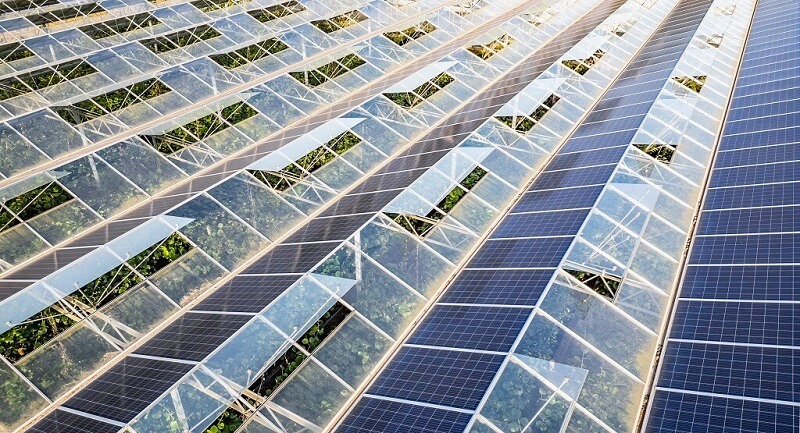
A solar farm does not require bare ground.
Native grasses, flowering plants, and other locally adapted vegetation can grow around panels, creating forage for bees and other pollinators while protecting soil from erosion.
USDA’s Natural Resources Conservation Service recommends considering locally adapted plants with suitable drought, moisture, and shade tolerance when preparing solar vegetation plans. Panel placement changes how rainfall reaches the soil, so moisture conditions can vary greatly across a single array.
Shade can even alter flowering schedules. NRCS reports in its guidance on conservation under solar that partial shade may delay and extend blooming periods for some species, potentially leaving flowers available later in the season.
Pollinator plantings still require active management. Invasive species, woody growth, vegetation height, erosion, and access for maintenance crews all need attention.
The Solar Array Has to Fit the Farm
A productive agrivoltaic site starts on paper long before posts are driven into the ground.
Panel height should accommodate workers, animals, or machinery expected to use the site. Row spacing must account for equipment turning radius.
Access around the array matters as much as access between the rows, particularly where hedgerows or woody vegetation border the site and a hedge cutting machine may be used for routine maintenance.
Irrigation lines need protection and access. Water running from the lower edge of panels should reach soil without creating persistent erosion channels.
Construction practices matter as well. Heavy equipment can compact agricultural soil during installation, which is one reason agricultural guidance encourages careful site preparation and restoration practices.
A sensible planning process considers:
- the crop or livestock operation expected to remain on the land;
- required equipment widths and access routes;
- seasonal shade across the growing area;
- irrigation, drainage and erosion control;
- fencing and electrical safety around animals;
- responsibility for mowing, grazing and vegetation management;
- lease terms covering agricultural access for the life of the solar project.
Long-term planning deserves special attention because solar installations commonly represent investments expected to operate for 25 years or longer.
Agrivoltaics Is Still Developing at Commercial Scale
Interest has moved well beyond experimental garden plots.
In August 2026, the Department of Energy published documentation covering University of Arizona work aimed at developing and implementing agrivoltaic treatments at industrial-scale photovoltaic facilities in the U.S. Southwest. The project includes food production practices, native grasses, and climate-smart crops.
Research at commercial scale matters because farm economics eventually decide which designs survive.
An agrivoltaic array may generate somewhat less electricity per acre when panels are spread farther apart. Crop yields can also change under partial shade. The useful measure is the combined performance of the land, including energy, agricultural production, operating costs, water use, and farm income.
No single configuration wins everywhere.
Solar Farms Can Remain Working Farms
Agrivoltaics gives farmers and solar developers a way to treat land as a shared productive resource. Crops can grow between or beneath panels, sheep can manage vegetation, and flowering ground cover can support pollinator habitat.
Strong projects begin with the agricultural use and build the solar layout around its practical needs. Climate, crops, machinery, soil, water, and farm economics all influence the final design.
Research published through 2026 shows genuine potential, along with considerable variation between crops and locations. The most promising future for agrivoltaics may come from treating every field as its own design problem, then finding the balance of sunlight that can be harvested twice.