





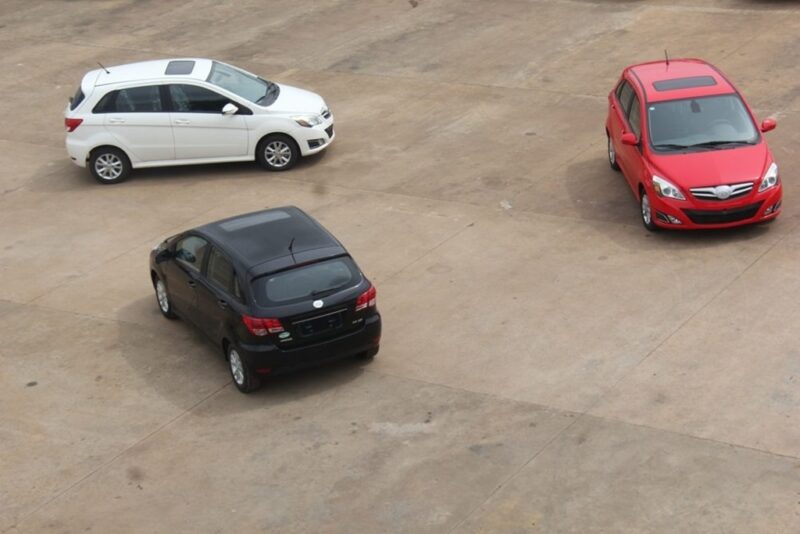
Africa’s automotive sector is shifting from being primarily a consumer of imports to developing locally manufactured vehicles designed for the continent’s demanding terrains and market needs.
For decades, imported vehicles dominated showrooms across major cities and rural towns alike. In 2020, vehicle imports totaled about US$52 billion, while exports reached roughly US$13 billion, showing a significant trade imbalance.
Local manufacturers are investing in assembly plants, supplier networks, and workforce training to increase domestic production.
Governments are also encouraging production through policy reforms, tariffs on used vehicles, and incentives for new manufacturing plants.
Therefore, nobody should be surprised that there are many excellent vehicles produced in Africa.
Let us check some of them out.
1. Innoson Umu and Other Models (Nigeria)
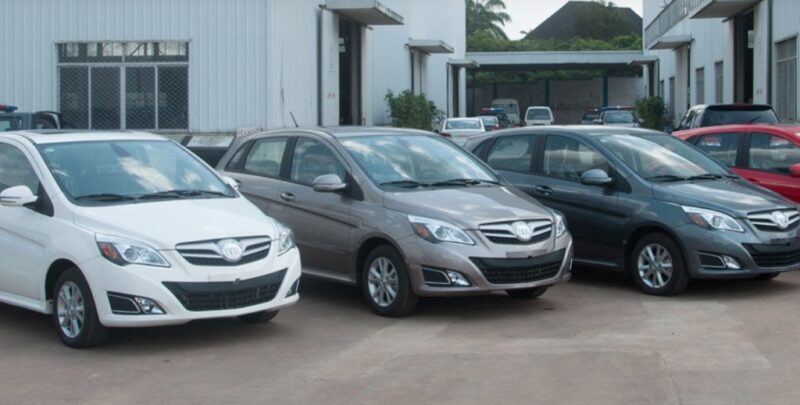
Nigeria hosts one of West Africa’s most visible indigenous automotive manufacturers.
Innoson Vehicle Manufacturing, headquartered in Umudim, operates large-scale assembly facilities focused on passenger and commercial vehicles tailored to domestic demand.
Product range covers multiple segments designed for both private and institutional buyers. Key offerings include:
- Umu Sedan is positioned as an affordable passenger car for middle-income households
- Innoson Pickup is built for logistics, agriculture, and small business operations
- City buses and larger coach configurations are used in public transportation fleets
Affordability and durability guide engineering priorities. Suspension systems are calibrated for uneven road surfaces common across many Nigerian regions.
Cabin layouts focus on practicality, especially for government agencies and commercial fleet operators.
Export activity extends into West Africa, strengthening regional trade ties. Vehicles are shipped to:
- Mali
- Sierra Leone
- Ghana
Local assembly supports job creation across welding, painting, quality control, and distribution.
Reduced reliance on imported secondhand vehicles helps conserve foreign exchange and supports domestic industrial capacity.
2. Kantanka Omama Pickup and Onantefo 4×4 (Ghana)
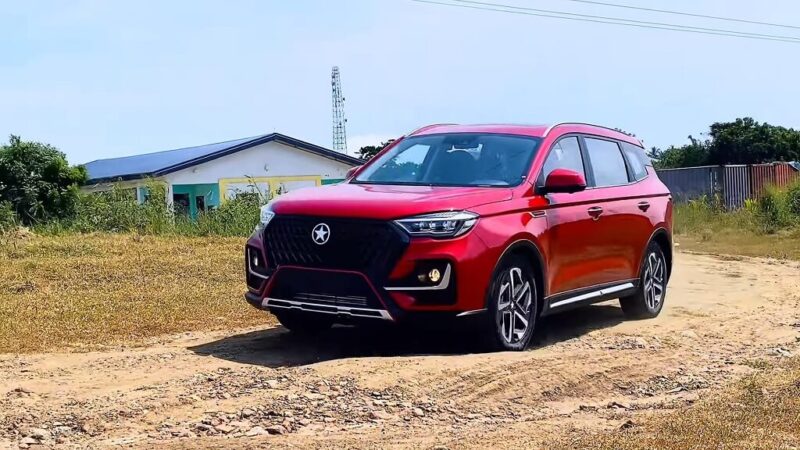
Ghana’s automotive sector includes Kantanka Automobile Company, a domestic manufacturer building SUVs and pickups adapted to national driving conditions.
Production combines locally sourced components with imported parts assembled within Ghana.
Omama Pickup targets commercial users who require dependable transport for agriculture, construction, and delivery services.
Reinforced chassis and higher ground clearance allow operation on gravel roads and semi-rural routes.
The Onantefo 4×4 SUV is engineered for families and institutional buyers needing off-road capability in areas with limited infrastructure.
Company leadership has publicly outlined ambitions to enter electric vehicle production tailored to Ghana’s domestic needs. Development plans include:
- Gradual expansion of assembly capacity
- Increased local component sourcing
- Long term introduction of electric models for urban mobility
Positioning centers on offering accessible alternatives to imported brands while building national manufacturing capability. Domestic production also supports skills transfer in mechanical engineering and automotive assembly.
3. Mobius II (Kenya)
Kenya’s Mobius Motors focuses on cost-conscious SUV production aimed at customers who prioritize reliability over luxury.
Mobius II SUV was developed specifically for East African road networks, including rural dirt tracks and seasonal flood zones.
Affordability remains central to its market positioning. Retail price averages about €9,000 or roughly $10,000, placing it among the most accessible new SUVs in the region.
Design choices intentionally limit complex electronics to simplify maintenance.
River crossings and long rural commutes influenced ground clearance and chassis strength.
Maintenance can often be performed with basic tools, reducing downtime for owners operating far from major service centers.
4. Wallyscar Models (Tunisia)

North Africa contributes to regional automotive output through manufacturers such as Wallyscar in La Marsa, Tunisia.
The company produces compact off-road and 4×4 vehicles with export orientation.
Annual production averages around 600 units. Sales channels extend across Africa, the Middle East, and parts of Europe.
Cooperation with European suppliers supports quality control and component consistency.
Vehicle positioning centers on compact utility models suited for mixed urban and semi-rural use. Engineering priorities include manageable size, practical interiors, and adaptable suspension systems.
Export revenue strengthens Tunisia’s participation in cross-border automotive trade.
5. Birkin Cars (South Africa)

South Africa’s automotive profile includes specialty manufacturers such as Birkin Cars, established in 1982. The company produces classic-style sports and kit vehicles inspired by lightweight performance designs.
SS3 Street Series remains one of its best-known models, targeting enthusiasts seeking high-performance handling and retro aesthetics.
Manufacturing focuses on craftsmanship and attention to mechanical detail rather than mass production volume.
International demand forms a substantial portion of total sales. Vehicles are exported to multiple global markets, supporting South Africa’s presence in niche performance segments.
Continued production since 1982 indicates consistent buyer interest in specialty sports vehicles built within the continent.
6. Kiira EVs and Kayoola Solar Bus (Uganda)
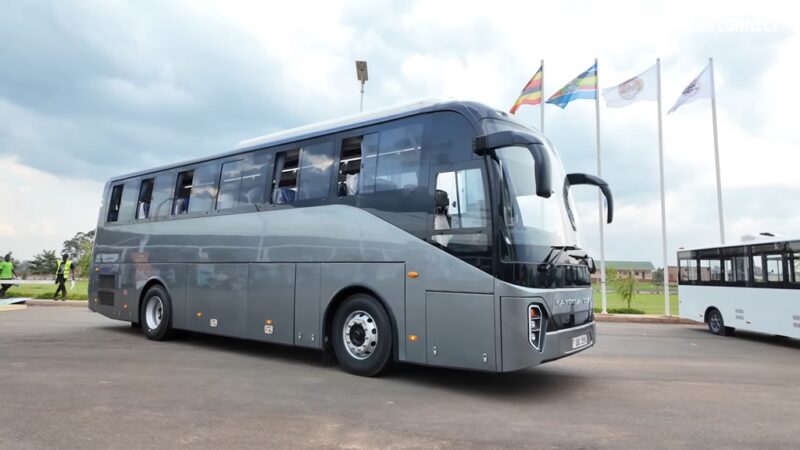
Uganda’s Kiira Motors Corporation operates as a state-owned automotive developer advancing electrification initiatives.
The organization introduced Africa’s first electric vehicle prototype and continues refining hybrid and battery electric platforms.
The Kiira EVS sedan represents domestic participation in new energy vehicle development.
Research and engineering activities aim to expand technical capability in battery systems and electric drivetrains.
Electric bus configuration signals early progress in reducing urban transport emissions.
Local manufacturing initiatives support industrial development while positioning Uganda within emerging EV production networks.
7. Laraki Supercars (Morocco)
Morocco contributes to high-performance automotive engineering through Laraki, a manufacturer focused on luxury supercars.
Portfolio includes Fulgura and Epitome concept vehicles designed for elite buyers.
Pricing for certain models exceeds $2 million. Powertrains feature high-output V8 engines paired with advanced performance engineering.
Production volumes remain intentionally limited, reinforcing exclusivity.
Capabilities demonstrated through these vehicles include:
- Advanced composite body construction
- High-performance engine integration
- Precision interior craftsmanship for ultra-high net worth clients
The presence of such premium models indicates technical proficiency in advanced automotive design within North Africa.
Using a Trolley Jack and Car Jack on Rugged African Test Tracks
Road testing and daily vehicle operation in many regions require mechanical practicality.
Rural routes can lack immediate access to advanced service facilities. Drivers and mechanics often depend on portable lifting tools during repairs.
Commonly used equipment includes trolley jacks and standard car jacks. Such tools enable:
- Safe tire replacement on uneven surfaces
- Suspension inspections after rough terrain travel
- Emergency brake or axle checks during long trips
Design engineers account for these maintenance realities.
Clearly marked lifting points and reinforced chassis sections ensure compatibility with standard car jack equipment; the trolley jack is robust and capable of handling heavy-duty use in rugged conditions.
Clearly marked lifting points and reinforced chassis sections ensure compatibility with standard car jack equipment.
African Assembly of Global Models
Vehicle production across Africa also includes assembly operations for major international brands.
Domestic plants assemble globally recognized models for both local sale and export.
South Africa as a Production Hub
South Africa remains the continent’s largest vehicle producer.
Manufacturing facilities operated by Volkswagen, BMW, Mercedes-Benz, Toyota, and Ford contribute significantly to output.
Exported models include:
- Volkswagen Polo
- BMW 3 Series
- Mercedes-Benz C-Class
- Toyota Hilux
- Toyota Corolla
- Ford Ranger
CKD and SKD assembly methods are commonly used, allowing partially assembled kits to be completed locally.
Employment spans assembly line workers, logistics personnel, and supplier networks.
Export revenue contributes substantially to national economic performance, with shipments reaching Europe, Asia, and other African markets.
Morocco and Egypt
Morocco has developed large scale production capacity approaching about 700,000 units annually. Geographic proximity to Europe supports export-focused manufacturing.
Trade agreements facilitate vehicle shipments into European markets.
Egypt maintains assembly plants for global brands including General Motors, Toyota, and Nissan.
Facilities supply domestic consumers while also serving regional markets in North Africa and the Middle East.
Industrial zones and updated policies aim to increase local content ratios and strengthen competitiveness.
Trends Shaping African Vehicle Production
Automotive growth across the continent is influenced by electrification, policy reform, and shifting consumer preferences.
Market data indicate expanding investment and rising demand for locally assembled vehicles.
Electrification is gradually expanding across selected markets. Kiira’s EV platforms represent early domestic innovation. Nigeria and Kenya are introducing EV assembly lines focused on vans and taxis suited for dense urban corridors.
South Africa is seeing growth in public charging infrastructure, supporting electric vehicle adoption.
Government policies aimed at limiting used car imports and offering preferential tax incentives seek to strengthen domestic production.
South Africa and Egypt promote export-oriented automotive manufacturing to increase foreign exchange earnings.
The African automotive market reached an estimated value of about $20.5 billion in 2024 and is projected to grow further.
SUVs are forecasted to become the largest segment, supported by consumer demand for higher ground clearance and multipurpose capability suited to varied road conditions.
Summary
Seven vehicles produced or assembled across Africa in 2026 demonstrate expanding manufacturing capacity across multiple segments.
Budget sedans, affordable SUVs, public buses, classic sports cars, and multimillion-dollar supercars collectively show broad production capability.
Growth in local assembly, electrification initiatives, and export-oriented plants suggests continued industrial development.