





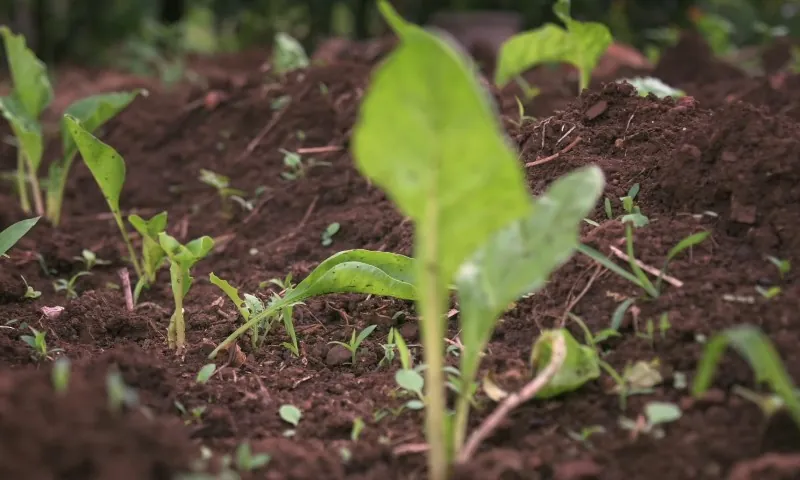
Drought stress affects crops in three critical ways. First, it limits germination and early growth. Second, it reduces grain or tuber formation.
Third, it accelerates crop failure once soil moisture drops below a threshold. Many modern staple crops were bred for yield under stable water conditions, not for survival.
Drought-resilient crops share common traits: deep or fibrous root systems, efficient water use, flexible growth cycles, and tolerance to poor soils.
When these traits are supported by regenerative practices such as mulching, cover cropping, and minimal tillage, yields become more stable even in bad years.
1. Sorghum
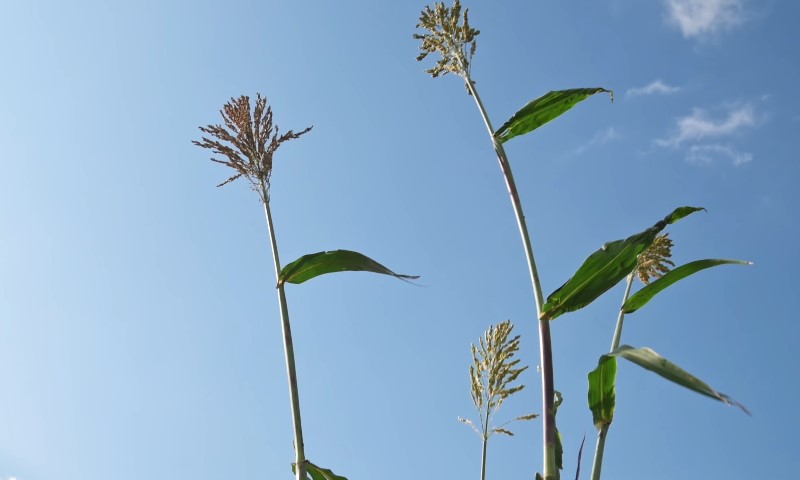
Sorghum is one of the most reliable drought-surviving grains in Africa. It originated in arid and semi-arid regions and has evolved to cope with heat and limited rainfall. Unlike maize, sorghum can pause growth during severe drought and resume when moisture returns, rather than dying outright.
Its waxy leaf coating reduces water loss, and its root system penetrates deeper soil layers where residual moisture remains available. Sorghum also performs well on marginal soils with low fertility, making it suitable for degraded land.
From a regenerative perspective, sorghum residue provides valuable ground cover after harvest. Leaving stalks on the field reduces evaporation, protects soil from erosion, and feeds soil microorganisms as the material decomposes.
Sorghum Performance Under Drought
| Factor | Sorghum |
| Minimum rainfall | ~300 mm per year |
| Heat tolerance | Very high |
| Soil requirement | Low fertility tolerated |
| Regenerative value | High residue, erosion control |
2. Pearl Millet
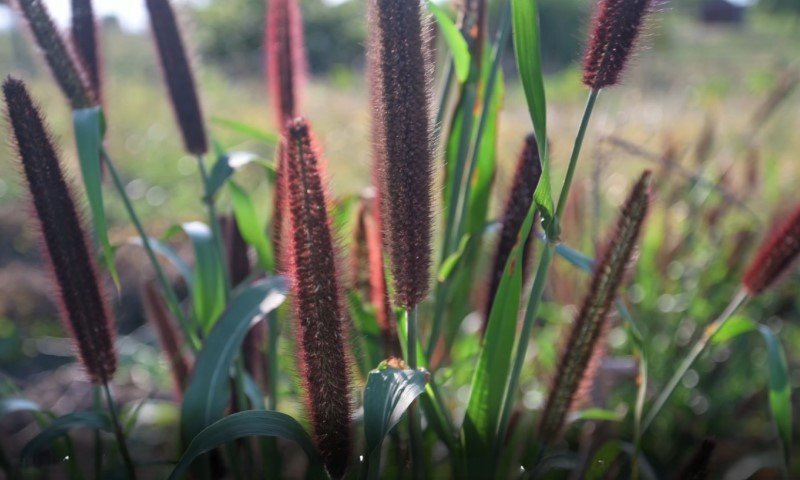
Pearl millet thrives in some of the harshest farming environments on the continent, particularly in the Sahel and parts of East Africa. It has one of the lowest water requirements of any cereal crop, often producing grain where annual rainfall is erratic and extremely low.
Millet’s fast growth cycle allows it to mature before drought intensifies late in the season. Its root system spreads efficiently through the topsoil, quickly capturing short rainfall events that deeper-rooted crops might miss.
Nutritionally, pearl millet provides high levels of iron and protein, making it valuable not only agronomically but also for household food security. In regenerative systems, millet fits well into crop rotations because it breaks pest cycles associated with maize-based systems.
Pearl Millet Drought Characteristics
| Trait | Pearl Millet |
| Rainfall tolerance | Extremely low |
| Growth cycle | Short |
| Heat resistance | Excellent |
| Role in rotation | Strong |
3. Cowpeas
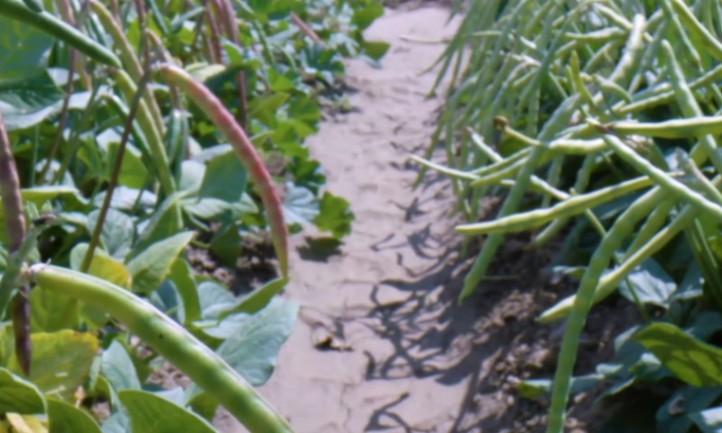
Cowpeas are not just drought-tolerant; they actively improve the soil while surviving dry conditions. As a legume, cowpeas fix atmospheric nitrogen, reducing the need for synthetic fertilizers and improving soil fertility for subsequent crops.
They tolerate both drought and heat, and a wide varieties produce acceptable yields even when rainfall is intermittent. Cowpeas also provide edible leaves, green pods, and dry grain, giving farmers multiple harvest options depending on how the season develops.
In regenerative systems, cowpeas are often intercropped with cereals or used as a cover crop. Their canopy shades the soil, reduces moisture loss, and suppresses weeds, all while feeding soil biology.
Cowpeas in Regenerative Systems
| Function | Benefit |
| Nitrogen fixation | Improves soil fertility |
| Canopy cover | Reduces evaporation |
| Food uses | Leaves, pods, grain |
| Drought survival | High |
4. Cassava
Cassava is one of the most drought-resilient staple crops available to African farmers. It survives long dry periods by slowing growth and storing energy in its roots. Even when leaves drop during drought, the plant can recover quickly once rains return.
Cassava’s deep root system allows it to access moisture far below the surface, and it performs well on poor soils where other crops struggle. This makes it a critical food security crop during extended droughts.
From a regenerative standpoint, cassava benefits greatly from mulching and intercropping. Organic ground cover reduces soil temperature and preserves moisture, while legumes planted between rows help maintain soil fertility.
Cassava as a Drought Survival Crop
| Aspect | Cassava |
| Drought survival | Very high |
| Soil tolerance | Poor soils accepted |
| Harvest flexibility | Delayed harvest possible |
| Food security role | Critical |
5. Pigeon Pea
View this post on Instagram
Pigeon pea is a deep-rooted legume that performs exceptionally well in dry environments. Its roots can reach moisture unavailable to shallow-rooted crops, allowing it to stay productive during drought.
Like cowpeas, pigeon pea fixes nitrogen, but it also functions as a semi-perennial shrub in some systems. This provides long-term soil cover, wind protection, and organic matter input.
Pigeon pea fits well into regenerative agroforestry and even agrovoltaics. Farmers often plant it alongside cereals, where it improves soil structure and provides protein-rich grain even in difficult seasons.
Pigeon Pea Regenerative Benefits
| Feature | Impact |
| Deep roots | Access deep moisture |
| Nitrogen fixation | Soil enrichment |
| Biomass production | Organic matter input |
| Drought performance | Strong |
How These Crops Fit Regenerative Agriculture
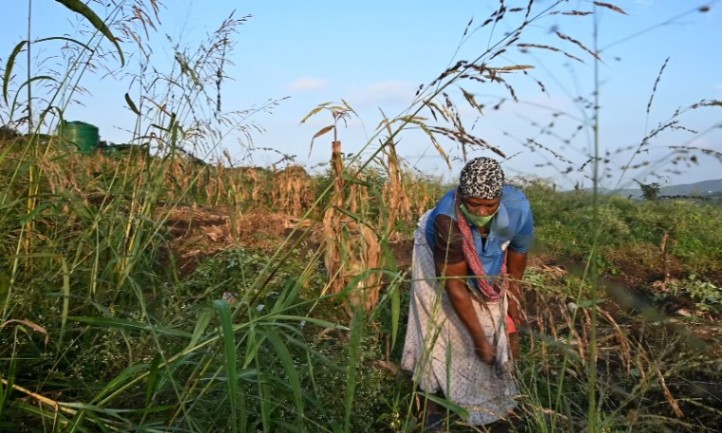
Regenerative agriculture focuses on rebuilding soil health so that crops can better withstand stress. Drought-resilient crops amplify the benefits of these practices.
Key regenerative techniques that enhance drought survival include maintaining permanent soil cover, minimizing tillage, rotating crops, and integrating legumes. These practices improve soil structure, increase organic matter, and enhance water infiltration and retention.
When sorghum, millet, cowpeas, cassava, and pigeon pea are used together in rotations or intercropping systems, farms become less dependent on rainfall timing and external inputs.
Crop and Practice Synergy
| Practice | Benefit in Drought |
| Mulching | Moisture retention |
| Intercropping | Risk spreading |
| Crop rotation | Soil health |
| Reduced tillage | Less water loss |
Final Perspective
Extreme drought is no longer an occasional challenge for African farmers. It is a defining condition of modern agriculture in many regions. Crop choice, therefore, becomes a long-term strategic decision rather than a seasonal one.
Sorghum, pearl millet, cowpeas, cassava, and pigeon pea have proven their ability to survive where other crops fail. When grown within regenerative systems that protect and rebuild the soil, these crops do more than survive drought. They stabilize food production, reduce risk, and give farmers greater control over an increasingly uncertain climate.